Mormon Coffee

It's forbidden, but it's good!

The official blog site of Mormonism Research Ministry

Monday, April 30, 2007

Amazing Grace

by Sharon

Last Saturday's Salt Lake Tribune (27 April) contained "A call to grace" written by Tribune journalist Peggy Fletcher Stack. It's the story of Jonathan Hays, a newly ordained Christian minister serving in New Song Presbyterian Church (PCA) in Salt Lake City.

Rev. Hays is unique in that he's the first pastor in Utah's PCA Church that is from Utah. According to the Tribune article, the Senior Pastor at New Song said,
"All the other pastors have moved from other places," [Rev. Samuel] Wheatley says. "We need insiders [like Hays] who automatically understand the challenges of Protestant ministry in a predominantly Mormon culture. They know the true points of difference and true points of similarity between the two and what needs to be articulated much more clearly."

Rev. Hays fits the bill. Growing up very active in the LDS Church, part of a multi-generational Mormon family, Jonathan Hays began looking into the history of Mormonism while he was at college. He
...was troubled by some of what he read, particularly the practice of polygamy, which the LDS Church abandoned in 1890. He could no longer reconcile what he read with what he heard from contemporary Mormon leaders.

"I left the LDS Church, not to become something else, but because I didn't think I could be LDS anymore," he says. "I kinda had a phase of rebellion. I was upset that God would let me be part of something that wasn't true."

Coming into contact with Christians who had "a real relationship with Jesus," Jonathan began to long for spiritual life. He decided to go to church one Sunday morning, but not knowing where to go, he chose the church closest to his home.
"What I experienced there was amazing," he says. "I heard grace and I saw grace and it blew me away because I had never seen or heard it before. I knew going in there that I wasn't good enough. I had seen it throughout my life as I tried to be a good Mormon; I knew I couldn't do it."

That night he prayed his own version of the "sinner's prayer" -- that his life was "screwed up" and he needed help.

"I didn't know the right way to pray, but I saw Jesus and so I leapt for him," he says.

Well, Jesus, ever faithful, caught Jonathan Hays. I'm willing to bet Rev. Hays now sings Psalm 40, verses in which all the redeemed in Christ rejoice:
I waited patiently for the Lord;
He inclined to me and heard my cry.
He drew me up from the pit of destruction,
out of the miry bog,
and set my feet upon a rock,
making my steps secure.
He put a new song in my mouth,
a song of praise to our God.
Many will see and fear,
and put their trust in the Lord.


This is God's amazing grace.

Labels: ,

Tuesday, October 10, 2006

Personal Worthiness Required

by Sharon

At the LDS Church's most recent General Conference held in Salt Lake City a little over a week ago, Elaine Dalton took the stand. Directing her remarks to the general membership of the Church, Mrs. Dalton delivered a talk she entitled, "Look toward Eternity!"

Near the beginning of her talk, Mrs. Dalton asked,
Do you understand why it is so important to remain clean and pure?…

I desire for every young man and woman, every young adult, and indeed each one of us to feel and know the importance of living a worthy and pure life. It is our personal worthiness that will qualify us to fulfill our individual earthly missions.

Mrs. Dalton identified our "earthly mission": making the choices that will enable us to return to Heavenly Father's presence and claim all the blessings He has in store for us.

It is, therefore, our personal worthiness that will qualify us to spend eternity in the presence of God.

In her talk Mrs. Dalton gave a nod to the need for Jesus Christ and faith:
It is through our faith in the Lord Jesus Christ that we can resist temptation. Our faith will enable us to shun evil.

However,
To become unspotted from the world requires not only faith, but repentance and obedience. We must live the standards and do those things which will entitle us to the constant companionship and guidance of the Holy Ghost…

Furthermore,
Personal worthiness is essential to enter His holy temples and to ultimately become heirs to "all [the] Father hath." … we can confidently enter the holy temples of God with a knowledge that we are worthy to go where the Lord Himself goes. When we are worthy, we can not only enter the temple, the temple can enter us. The Lord's promises of salvation and happiness become ours… (emphasis retained from the original)

So the bottom line (for a Mormon) when looking toward eternity is personal worthiness. It is necessary to be clean and pure by one's own merits. Our choices, our obedience, our purity, our worthiness will "qualify" and "entitle" us to go where the Lord goes and receive salvation.

Apparently, though grace through God's mercy is available, it's not a good idea to count on it.

According to Mrs. Dalton, she and her husband were given counsel on their wedding day from LDS President Gordon B. Hinckley:
"Always live in such a way that when you need the Lord's blessings, you can call upon Him and receive them because you are worthy. There will come times in your life when you will need immediate blessings. You will need to live in such a way that they will be granted--not out of mercy but because you are worthy."

President Hinckley's counsel is antithetical to the teachings of the New Testament. There the apostles put God's mercy at the very heart of His blessings and promise of eternal life. Consider these passages:
  • It does not, therefore, depend on man's desire or effort, but on God's mercy. (Romans 9:16)

  • When the kindness and the love of God our Savior toward man appeared, not by works or righteousness which we have done, but according to His mercy He saved us, through the washing of regeneration and renewing of the Holy Spirit, whom He poured out on us abundantly through Jesus Christ our Savior, that having been justified by His grace we should become heirs according to the hope of eternal life. (Titus 3:4-7)

  • Keep yourselves in the love of God, looking for the mercy of our Lord Jesus Christ unto eternal life. (Jude 1:21)

Mrs. Dalton expressed her gratitude for the counsel given her by President Hinckley:
Daily, these holy habits and righteous routines have helped steady us on the path that leads back into our Father's presence. And today I say, "We thank thee, O God, for a prophet to guide us in these latter-days."

I, too, am filled with deep gratitude, but not for a prophet who's unbiblical pronouncements place me under the heavy burden of making myself worthy of Heaven. I am thankful for the sure promises of God found in His Holy Word. With King David I wholeheartedly throw myself upon the astonishing mercy of Almighty God:

O LORD, hear my prayer,
listen to my cry for mercy;
in Your faithfulness and righteousness
come to my relief.
Do not bring Your servant into judgment,
for no one living is righteous before You…
Let the morning bring me word
of Your unfailing love,
for I have put my trust in You.

-from Psalm 143-

Labels: , , ,

Tuesday, September 26, 2006

Commandment-keeping and God's Grace


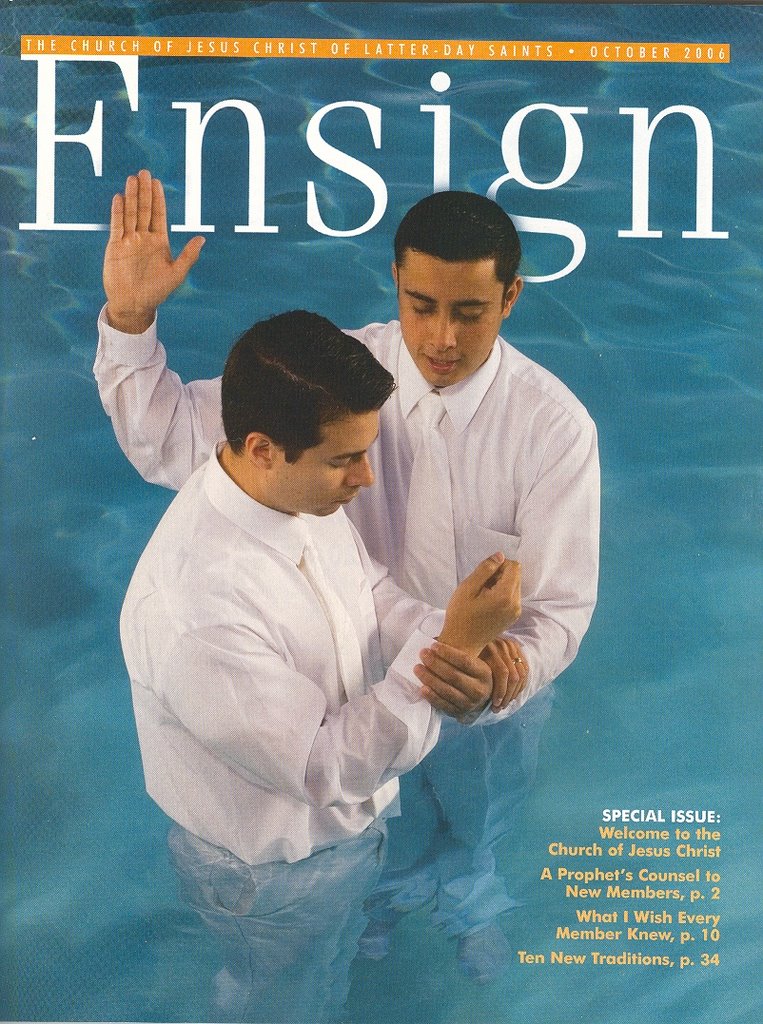
My October, 2006 edition of Ensign just arrived. I wish more of my Christian friends who think Mormonism is abandoning its heretical past would take closer notice of what the LDS Church is still teaching; for instance, in an article titled “Plain and Precious Truths Restored.” On page 53, Clyde Williams, BYU assistant professor of Ancient Scripture, emphasizes the importance of commandment-keeping if a person hopes to achieve God’s grace.

Elder B.H. Roberts of the Seventy (1857-1933) explained how the unconditional nature of the Atonement in regard to Adam’s transgression and its conditional nature regarding men’s personal sins is a doctrine “peculiar to ‘Mormonism’…and is derived almost wholly from the teachings of the Book of Mormon. In that distinction the beauty and glory of the Atonement, the balanced claims of justice and mercy shine forth as no where else, even in holy writ, -- much less in the uninspired writings of men. It may be regarded as the ‘Mormon’ contribution to views of the Atonement of Christ, for it is to be found no where else except in Mormon literature.” The perfect relationship between the atoning grace of Christ and the obedient efforts of mankind is powerfully stated by Nephi: “We know that it is by grace that we are saved, after all we can do” (2 Nephi 25:23). Furthermore, we are invited to “come unto Christ, and be perfected in him.” When we deny ourselves “of all ungodliness,” then and only “then is his grace sufficient” for us (Moroni 10:32).

Think about it. Then and only then is his grace sufficient for us. There is nothing really new here that I haven’t heard before. Robert Millet and Joseph Fielding McConkie said virtually the same thing when they also coupled 2 Nephi 25:23 with Moroni 10:32. They wrote, “Indeed, it is only after a person has so performed a lifetime of works and faithfulness -- only after he has come to deny himself of all ungodliness and every worldly lust -- that the grace of God, that spiritual increment of power, is efficacious” (Joseph Fielding McConkie and Robert L. Millet, Doctrinal Commentary on the Book of Mormon 1:295).

My question is, do these men really think they have “denied themselves of all ungodliness and every worldly lust”? If not, it seems clear by their own admission that the grace of God is not efficacious in their lives. If they think they have denied themselves of all ungodliness and every worldly lust, then I think they need to re-read 1 John 1:8, “If we say that we have no sin, we deceive ourselves, and the truth is not in us.”

Labels: , , ,

Monday, March 13, 2006

After All We Can Do

Last week I wrote about "Trevor," a man who took issue with a comment I left at a news web site (see Searching for Salvation: The Bible or TV Guide? My comment set Ephesians 2:8-10 ("For by grace you have been saved through faith, and that not of yourselves…") against a Book of Mormon passage, (2 Nephi 25:23: "…for we know that it is by grace that we are saved, after all we can do"). Trevor accused me of deliberately distorting what Mormons believe.

I can only guess at what Mormon beliefs Trevor thought I was distorting, because he gave no particulars. So let's assume for the sake of argument that he thought I distorted the meaning of the Book of Mormon passage.

My proposition was this: In the Bible God offers sinful people eternal life as a free gift through Jesus Christ; the Book of Mormon promises salvation only after all we can do. There is no dispute regarding the wording of the respective passages; one does say we are saved by grace through faith, the other that we are saved by grace after all we can do. The question, then, would be in the interpretation. Therefore, take a look at what some LDS authorities and authors have said about the 2 Nephi passage and the LDS doctrine of salvation:
“What is meant by 'after all we can do'? 'After all we can do' includes extending our best effort. 'After all we can do' includes living His commandments. 'After all we can do' includes loving our fellowmen and praying for those who regard us as their adversary. 'After all we can do' means clothing the naked, feeding the hungry, visiting the sick and giving 'succor [to] those who stand in need of [our] succor' (Mosiah 4:15)—remembering that what we do unto one of the least of God's children, we do unto Him. (See Matt. 25:34-40; D&C 42:38.) 'After all we can do' means leading chaste, clean, pure lives, being scrupulously honest in all our dealings and treating others the way we would want to be treated. ("After All We Can Do," Christmas Devotional, Salt Lake City, Utah, Dec. 9, 1982; quoted in Teachings of Ezra Taft Benson.)" ("Savior accomplished atoning sacrifice through His grace," LDS Church News, 02/03/96, page 14.)

“President Harold B. Lee treated the topic of working out one's salvation in one of his books, Stand Ye in Holy Places: 'We hear much from some persons of limited understanding about the possibility of one's being saved by grace alone. But it requires the explanation of another prophet to understand the true doctrine of grace as he explained in these meaningful words: "For," said this prophet, "we labor diligently to write, to persuade our children, and also our brethren, to believe in Christ, and to be reconciled to God; for we know that it is by grace that we are saved, after all we can do." (2 Ne. 25:23.) Truly we are redeemed by the atoning blood of the Savior of the world, but only after each has done all he can to work out his own salvation.'"("Work out salvation with fear and trembling," LDS Church News, 09/14/91, page 14.)

“As is the case with all gospel principles, the doctrine of individual accountability grows out of the atoning sacrifice of Christ. Teaching these principles, Nephi testified that we are saved by grace, but only "after all we can do." (2 Nephi 25:23.) It is by the grace of Christ that we have granted to us the materials of life with which we can build, but God does not do the building for us. The responsibility of building with those materials is ours. The plan of salvation is in a large measure a do-it-yourself project” (Joseph Fielding McConkie, Seeking the Spirit, page 99.)

“In the plan of salvation God does for human beings only what they cannot do for themselves. Man must do all he can for himself. The doctrine is that we are saved by grace, 'after all we can do' (2 Ne. 25:23)” (Robert J. Matthews, A Bible! A Bible!, page 186.)

“To explain how much confidence we should have in God, were I using a term to suit myself, I should say implicit confidence. I have faith in my God, and that faith corresponds with the works I produce. I have no confidence in faith without works. My faith is, when we have done all we can, then the Lord is under obligation, and will not disappoint the faithful; he will perform the rest” (President Brigham Young, Discourses of Brigham Young, page 155.)

It's clear from these teachings that the LDS doctrine on salvation is that it is given through grace only after all we can do—which is how I presented it in the Willamette Week comment. It's pretty hard to see how that could be compatible with Ephesians 2:4-9:
"But God, who is rich in mercy, because of His great love with which He loved us, even when we were dead in trespasses, made us alive together with Christ (by grace you have been saved), and raised us up together, and made us sit together in the heavenly places in Christ Jesus, that in the ages to come He might show the exceeding riches of His grace in His kindness toward us in Christ Jesus. For by grace you have been saved through faith, and that not of yourselves; it is the gift of God, not of works, lest anyone should boast."

Since I did not "deliberately distort" this point of "what Mormons believe," perhaps Trevor was referring to the comment that Arthur Kane "decided to jettison the Bible in favor of the Book of Mormon." I'll blog about that later this week.


I have previously blogged about the LDS doctrinal claim which states Jesus makes up the difference between our innate or self-achieved righteousness and the righteousness God requires. To read about this take a look at Insurmountable Debt.

Labels: , , ,

Thursday, February 09, 2006

Insurmountable Debt

I was reading Matthew 18, the parable of the unforgiving servant. I was really struck by this:
"Therefore the kingdom of heaven may be compared to a king who wished to settle accounts with his servants. When he began to settle, one was brought to him who owed him ten thousand talents. And since he could not pay, his master ordered him to be sold, with his wife and children and all that he had, and payment to be made. So the servant fell on his knees, imploring him, 'Have patience with me, and I will pay you everything.' And out of pity for him, the master of that servant released him and forgave him the debt." (Matthew 18:22-27)

I don't know why I've never thought about it before, but today I recognized what Jesus was saying.

A talent was equal to about 20 years' wages for a laborer. The servant in the parable owed a sum equal to 200,000 years' worth of labor. Let's put that into 2006 dollars. If a years' salary was $30,000, the servant owed his master $6 billion!

Jesus' point in using such a huge sum in the parable was to show us how utterly impossible it is for us to pay our enormous sin debt. Though the servant implored his master to be patient until the servant could pay up, the master knew better. Where would a servant ever get that kind of money? The master had pity on the servant and graciously cancelled his debt.

This all got me to thinking about Mormonism and the way Latter-day Saints understand their sin and God's grace. I can't count the times I've read and been told by Mormons, "We don't believe in salvation by works alone. We believe that good works are necessary, but not enough. We do all we can, but still fall short. That's when God's grace kicks in. Jesus makes up the difference."

LDS Apostle Dallin Oaks said it this way: "When we have done all that we are able, we can rely on God's promised mercy…He is our Savior, and when we have done all that we can, He will make up the difference…" (October 1993 General Conference, quoted in Church News, 1 April 2000, page 14)


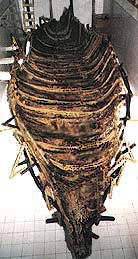
A friend of mine uses a boat analogy when talking with Mormons about salvation. An individual's good works are the planks of wood that make up the hull of the boat (salvation). Latter-day Saints believe the grace of God given through Christ is the pitch that fills in the cracks between the planks, making the boat safe and seaworthy. But there's a problem here.

Take a look at how God describes natural man in Romans 1:
"They were filled with all manner of unrighteousness, evil, covetousness, malice. They are full of envy, murder, strife, deceit, maliciousness. They are gossips, slanderers, haters of God, insolent, haughty, boastful, inventors of evil, disobedient to parents, foolish, faithless, heartless, ruthless." (Romans 1:29-31)

You see, the sin debt for each of us is enormous! Six-billion dollars. Two-hundred-thousand years' worth of labor.

Some might say, "Well, we have eternity to work it off. We can do it if we just have enough time." Sorry, folks. The master in Jesus' parable is already entitled to all the labor his servant can provide. The debt owed is above and beyond normal labor. It is impossible to pay.

And what makes us think that anything we do would be pleasing and acceptable to God anyway? Look again at the qualities He finds in us! How can our sin-tainted good works be used to build a sound boat? In my friend's analogy the truth is that the planks of the boat are all rotten. There's nothing there firm enough to be patched by God's grace. Instead of floating on the water this boat sinks like a stone—and takes anyone relying on it to the bottom of the sea.

No, there's nothing we can contribute to the building of our boat. Like the servant in Jesus' parable, our only hope is grace and mercy. God must provide both the planks and the pitch. And He does. Thanks be to God for His indescribable gift!

Labels: , , , , ,