Mormon Coffee

It's forbidden, but it's good!

The official blog site of Mormonism Research Ministry

Friday, June 01, 2007

Really -- What is Mormonism? Most Evangelicals Would Be Surprised.


by Sharon

On May 31st Christianity Today online posted an article which addresses the issue of Mitt Romney and Mormonism, asking, "Can conservative Protestants vote for a member of what they consider a cult?" The article is co-written by Mormon professor Robert Millet and Christian author Gerald McDermott.

Of particular interest in this article is where it addresses the concerns evangelicals have regarding Mormonism's non-Christian doctrines. The authors write,
But evangelicals are reluctant to vote for a Mormon. Historically, evangelicals and Mormons have demonized each other. Evangelicals consider the Church of Latter-day Saints to be a cult and typically think Mormons are not real Christians.

Evangelicals accuse Mormons of adding new revelation (the Book of Mormon) to the Bible. They think Mormons teach that humans are saved by good works rather than by Jesus Christ, and that humans are of the same species as Jesus and can someday attain his status. In addition, evangelicals say, Mormons reject key Christian doctrines such as the Trinity and creatio ex nihilo (God creating the world out of nothing)…

Mormon beliefs are not as un-evangelical as most evangelicals think. Unlike Jehovah's Witnesses, Mormons hold firmly to the deity of Christ. For Latter-Day Saints, Jesus is not only the Son of God but also God the Son. Evangelical pollster George Barna found in 2001 that while only 33 percent of American Catholics, Lutherans, and Methodists agreed that Jesus was "without sin," Mormons were among the "most likely" to say that Jesus was sinless.

Most evangelicals would also be surprised to learn that the Book of Mormon contains passages that teach salvation by the merits and grace of Christ ( "There is no flesh that can dwell in the presence of God, save it be through the merits, and mercy, and grace of the Holy Messiah" 2 Nephi 2:8) and others that require personal trust in Christ for salvation, such as 1 Nephi 10:4-6: "All mankind were in a lost and in a fallen state, and ever would be save they should rely on this Redeemer."

Note the way the authors have presented the concerns of Christians: evangelicals demonize Mormons; evangelicals accuse Mormons; evangelicals think Mormons teach non-Christian doctrines about salvation and Christ; evangelicals say Mormons reject the Trinity, etc.; but evangelicals are wrong: "Mormon beliefs are not as un-evangelical as most evangelicals think."

Take a look at just one doctrinal issue raised by the authors: salvation. Speaking of evangelicals collectively, the authors write, "They think Mormons teach that humans are saved by good works rather than by Jesus Christ." The authors dance around this significant doctrinal concern. They set it up in terms which give the impression that evangelicals deeply misunderstand LDS soteriology and state that Mormon beliefs are not really so different after all. Millet and McDermott quote LDS scriptures which talk about Christ, mercy and grace, and apparently hope that will be enough to convince the uninformed reader that the Mormon view of salvation is compatible with evangelical (biblical) teaching. But of course it's not.

Mormonism rejects the idea that human beings are saved by good works without the aid of Christ; Millet and McDermott are correct to suggest that those who think otherwise misunderstand Mormon doctrine. But this is not to say that Mormonism embraces the biblical teaching of salvation by grace through faith alone based on the merits and atonement of Christ. The Book of Mormon says,
For we labor diligently to write, to persuade our children, and also our brethren, to believe in Christ, and to be reconciled to God; for we know that it is by grace that we are saved, after all we can do. (2 Nephi 25:23)

This is not salvation by faith alone, but salvation by grace coupled with works (please see Paul's letter to the Galatians for an understanding of what the Bible says about this idea). The Mormon teaching on salvation is incompatible with the evangelical understanding of this doctrine -- the doctrine which is at the very heart of the Gospel and is treasured deeply in the heart of every evangelical Christian.

Millet and McDermott don't mention this disparity in their article. Furthermore, they don't tell Christianity Today readers what twelfth LDS President Spencer W. Kimball said about the Christian doctrine of salvation:
One of the most fallacious doctrines originated by Satan and propounded by man is that man is saved alone by the grace of God; that belief in Jesus Christ alone is all that is needed for salvation. (The Miracle of Forgiveness, 206)

I wonder; is this is what Millet and McDermott are referring to when they say Mormons have historically demonized evangelicals?

At any rate, Millet and McDermott have misled their readers about the compatibility of Mormonism and evangelical Christianity. They have obscured significant doctrinal differences with verbal slight-of-hand. But at the same time it seems they have taken care to keep from going too far. They write,
Of course there is still doctrinal distance between Mormons and evangelicals.

Yes, really an unbridgeable chasm. But Millet and McDermott make no effort to inform their readers of any specifics. If you're interested, some of the doctrines responsible for the vast spiritual distance between Mormons and evangelicals are documented here.

Labels:

Monday, March 12, 2007

Different Worlds

by Sharon

On the newly revamped LDS web site there is a section titled Core Beliefs: Why and How Are Mormons Different? I really appreciate the effort of the LDS Church to acknowledge its doctrinal differences with historic Christianity, though I believe much of the information provided is severely lacking in clarity. I think this is due to an effort on the Church's part to acknowledge but minimize the significance of these differences.

At any rate, the web site says,
Representatives of The Church of Jesus Christ of Latter-day Saints are often asked whether the Church is becoming more “mainstream” over time.

If the term “mainstream” means that Latter-day Saints are increasingly viewed as a contributing, relevant and significant part of society -- particularly in the United States, where there are now some six million members -- then, of course, the answer is "yes."

...If being described as "mainstream" means the Church loses the very distinctiveness of the beliefs that are at the heart of its message, the answer is different. While respecting the divergent views of other people of faith, Church leaders want to be clear about the beliefs that help define Latter-day Saints.

The following are some of the more important differences in belief and practice between The Church of Jesus Christ of Latter-day Saints and other Christian churches.

One of the eight topics listed is this:
Plan of salvation

Latter-day Saint theology embraces what Mormons refer to as the "plan of salvation." The topic covers the pre-mortal state of all mankind, the reasons why God created the world, the nature and purpose of our life here and what future awaits us in the next life.

Another way to state what the LDS Plan of Salvation encompasses might be this: "Where did I come from, why am I here, and where am I going?"

These are some pretty significant doctrinal issues.
  • The nature of man
  • God's purpose in creation
  • God's requirements for reconciliation with Him
  • The nature of eternal life

Mormonism's disparity from "other Christian churches" on just this short list of core beliefs, not even taking into account the other seven listed topics, must be distressing to those who say members of the LDS Church believe the same things "other Christians" believe. The lion's share of the Christian worldview is represented within this short list. Even if we could find other areas of doctrinal agreement, Mormonism and Christianity are literally worlds apart.

Labels:

Thursday, December 28, 2006

Bound for Glory?

by Sharon

While reading the Book of Revelation I was struck by Jesus' words regarding the final judgment of those whose names are not written in the Book of Life:
…the cowardly, unbelieving, abominable, murderers, sexually immoral, sorcerers, idolaters, and all liars shall have their part in the lake which burns with fire and brimstone, which is the second death. (21:8)

Jesus here draws a distinction between those who belong to Him -- those who will "inherit all things," who will forever enjoy Him as their God, who will be His sons and daughters -- contrasted with those who will not receive blessings but will instead "have their part" in the lake of fire. These will not receive eternal life in God's presence, but will receive the second death: eternal punishment.

The list of sinful behaviors and attitudes Jesus speaks of reminds me of another list, this one found in LDS scripture. Doctrine and Covenants says:
But [these] received not the gospel, neither the testimony of Jesus,… These are they who are liars, and sorcerers, and adulterers, and whoremongers, and whosoever loves and makes a lie. (76:101, 103)

Several items on the biblical list and the D&C list match:
  • unbelieving/received not the gospel
  • sexually immoral/adulterers-whoremongers
  • sorcerers
  • liars

It sounds like both passages are talking about the same group of people. But according to the Bible, Jesus says these people will be finally consigned to the "second death" in the lake that burns with fire and brimstone, while Doctrine and Covenants says these people will inherit glory in the Telestial kingdom of God.

Some Mormon leaders, including 10th LDS President Joseph Fielding Smith, have suggested that sinners such as those listed above will spend limited time in the lake of fire and brimstone; they will be released as heirs of salvation after they have sufficiently suffered for their sins. However, Mr. Smith wrote:
Spiritual death is defined as a state of spiritual alienation from God -- the eternal separation from the Supreme Being; condemnation to everlasting punishment is also called the second death. In other words, the second or spiritual death,…is the final judgment passed upon the wicked… (Doctrines of Salvation 2:217)

In Mormonism there seems to be some variance of opinion on exactly what "second death" is, who is deserving of it, and how long it lasts. But in Christianity -- historically -- the second death has been understood to be final, permanent, and hopeless. In Revelation Jesus contrasts the second death with eternal life. Those who have been redeemed by the blood of the Lamb receive the gift of eternal life, while those who have died in their sins receive their part -- the consequence of being an enemy of God -- which is eternal damnation.

But according to Mormonism, after the wicked dead come to their senses and repent, after they suffer for their sins for a sufficient time, they will receive an eternal home in glory. This glory, which they have earned by personally paying for their sins (see Doctrine and Covenants Student Manual Religion 325-325, 204), is described in LDS writings. The inhabitants of the Telestial kingdom will delight in an existence of far greater comfort and enjoyment than anything available on earth; a glory beyond mortal understanding. There will be no death, disease, infirmity, taxes, wars, bills or menial labor. The people will be free to socialize, travel and learn (Victor Ludlow, Principles and Practices of the Restored Gospel,240-241). In fact, Joseph Smith reportedly said,
The telestial kingdom is so great, if we knew what it was like we would kill ourselves to get there. (see Richard Neitzel Holzapfel,The Heavens Are Open, The 1992 Sperry Symposium of the Doctrine and Covenant and Church History, 155)

According to Mormonism, those deserving of the Telestial kingdom have lived their lives in open rebellion against God. They have hearts that are hard and cold when it comes to Christ. They are not just misguided people who have given in to the temptations of sin more often than not; they have "refused to worship the true and living God" (LDS Apostle Bruce McConkie, Mormon Doctrine, 778).

Even if it were possible for dead people to pay their own sin debt by suffering for a finite period of time (it is not), after their debt is paid they remain what they have always been at their core: enemies of God. This is something Mormonism misses. It's not just about what we do, but about what we are.

Jesus did not come only to pay the penalty for our sins; He came to make us new creatures. He came to take away our guilt and bestow on us His righteousness. The Apostle Paul wrote,
  • He made Him [Christ Jesus] who knew no sin to be sin on our behalf, that we might become the righteousness of God in Him. (2 Corinthians 5:21)

  • Therefore if any man is in Christ, he is a new creature; the old things passed away; behold, new things have come. (2 Corinthians 5:17)

Because of Christ's righteousness, the sinner who places faith in Him becomes righteous before God.

Spending time in prison does not change a hardened criminal into a law-abiding citizen. During his prison sentence he works off his debt to society; he may even resolve to "go straight" in order to avoid future punishment. But he isn't changed from the inside out -- not unless God intervenes and makes him a new creature.

And being a new creature is what Jesus talks about in the Book of Revelation. He says,
Behold, I make all things new…It is done! I am the Alpha and the Omega, the Beginning and the End. I will give of the fountain of the water of life freely to him who thirsts. He who overcomes shall inherit all things, and I will be his God and he shall be My son. But the cowardly, unbelieving, abominable, murderers, sexually immoral, sorcerers, idolaters, and all liars shall have their part in the lake which burns with fire and brimstone, which is the second death. (21:5-8)

Seeing how Jesus puts it, it doesn't sound to me like that second set of people are bound for eternal glory. He who has an ear to hear, let him hear.

Labels: , , , ,

Tuesday, October 10, 2006

Personal Worthiness Required

by Sharon

At the LDS Church's most recent General Conference held in Salt Lake City a little over a week ago, Elaine Dalton took the stand. Directing her remarks to the general membership of the Church, Mrs. Dalton delivered a talk she entitled, "Look toward Eternity!"

Near the beginning of her talk, Mrs. Dalton asked,
Do you understand why it is so important to remain clean and pure?…

I desire for every young man and woman, every young adult, and indeed each one of us to feel and know the importance of living a worthy and pure life. It is our personal worthiness that will qualify us to fulfill our individual earthly missions.

Mrs. Dalton identified our "earthly mission": making the choices that will enable us to return to Heavenly Father's presence and claim all the blessings He has in store for us.

It is, therefore, our personal worthiness that will qualify us to spend eternity in the presence of God.

In her talk Mrs. Dalton gave a nod to the need for Jesus Christ and faith:
It is through our faith in the Lord Jesus Christ that we can resist temptation. Our faith will enable us to shun evil.

However,
To become unspotted from the world requires not only faith, but repentance and obedience. We must live the standards and do those things which will entitle us to the constant companionship and guidance of the Holy Ghost…

Furthermore,
Personal worthiness is essential to enter His holy temples and to ultimately become heirs to "all [the] Father hath." … we can confidently enter the holy temples of God with a knowledge that we are worthy to go where the Lord Himself goes. When we are worthy, we can not only enter the temple, the temple can enter us. The Lord's promises of salvation and happiness become ours… (emphasis retained from the original)

So the bottom line (for a Mormon) when looking toward eternity is personal worthiness. It is necessary to be clean and pure by one's own merits. Our choices, our obedience, our purity, our worthiness will "qualify" and "entitle" us to go where the Lord goes and receive salvation.

Apparently, though grace through God's mercy is available, it's not a good idea to count on it.

According to Mrs. Dalton, she and her husband were given counsel on their wedding day from LDS President Gordon B. Hinckley:
"Always live in such a way that when you need the Lord's blessings, you can call upon Him and receive them because you are worthy. There will come times in your life when you will need immediate blessings. You will need to live in such a way that they will be granted--not out of mercy but because you are worthy."

President Hinckley's counsel is antithetical to the teachings of the New Testament. There the apostles put God's mercy at the very heart of His blessings and promise of eternal life. Consider these passages:
  • It does not, therefore, depend on man's desire or effort, but on God's mercy. (Romans 9:16)

  • When the kindness and the love of God our Savior toward man appeared, not by works or righteousness which we have done, but according to His mercy He saved us, through the washing of regeneration and renewing of the Holy Spirit, whom He poured out on us abundantly through Jesus Christ our Savior, that having been justified by His grace we should become heirs according to the hope of eternal life. (Titus 3:4-7)

  • Keep yourselves in the love of God, looking for the mercy of our Lord Jesus Christ unto eternal life. (Jude 1:21)

Mrs. Dalton expressed her gratitude for the counsel given her by President Hinckley:
Daily, these holy habits and righteous routines have helped steady us on the path that leads back into our Father's presence. And today I say, "We thank thee, O God, for a prophet to guide us in these latter-days."

I, too, am filled with deep gratitude, but not for a prophet who's unbiblical pronouncements place me under the heavy burden of making myself worthy of Heaven. I am thankful for the sure promises of God found in His Holy Word. With King David I wholeheartedly throw myself upon the astonishing mercy of Almighty God:

O LORD, hear my prayer,
listen to my cry for mercy;
in Your faithfulness and righteousness
come to my relief.
Do not bring Your servant into judgment,
for no one living is righteous before You…
Let the morning bring me word
of Your unfailing love,
for I have put my trust in You.

-from Psalm 143-

Labels: , , ,

Tuesday, September 26, 2006

Commandment-keeping and God's Grace


My October, 2006 edition of Ensign just arrived. I wish more of my Christian friends who think Mormonism is abandoning its heretical past would take closer notice of what the LDS Church is still teaching; for instance, in an article titled “Plain and Precious Truths Restored.” On page 53, Clyde Williams, BYU assistant professor of Ancient Scripture, emphasizes the importance of commandment-keeping if a person hopes to achieve God’s grace.

Elder B.H. Roberts of the Seventy (1857-1933) explained how the unconditional nature of the Atonement in regard to Adam’s transgression and its conditional nature regarding men’s personal sins is a doctrine “peculiar to ‘Mormonism’…and is derived almost wholly from the teachings of the Book of Mormon. In that distinction the beauty and glory of the Atonement, the balanced claims of justice and mercy shine forth as no where else, even in holy writ, -- much less in the uninspired writings of men. It may be regarded as the ‘Mormon’ contribution to views of the Atonement of Christ, for it is to be found no where else except in Mormon literature.” The perfect relationship between the atoning grace of Christ and the obedient efforts of mankind is powerfully stated by Nephi: “We know that it is by grace that we are saved, after all we can do” (2 Nephi 25:23). Furthermore, we are invited to “come unto Christ, and be perfected in him.” When we deny ourselves “of all ungodliness,” then and only “then is his grace sufficient” for us (Moroni 10:32).

Think about it. Then and only then is his grace sufficient for us. There is nothing really new here that I haven’t heard before. Robert Millet and Joseph Fielding McConkie said virtually the same thing when they also coupled 2 Nephi 25:23 with Moroni 10:32. They wrote, “Indeed, it is only after a person has so performed a lifetime of works and faithfulness -- only after he has come to deny himself of all ungodliness and every worldly lust -- that the grace of God, that spiritual increment of power, is efficacious” (Joseph Fielding McConkie and Robert L. Millet, Doctrinal Commentary on the Book of Mormon 1:295).

My question is, do these men really think they have “denied themselves of all ungodliness and every worldly lust”? If not, it seems clear by their own admission that the grace of God is not efficacious in their lives. If they think they have denied themselves of all ungodliness and every worldly lust, then I think they need to re-read 1 John 1:8, “If we say that we have no sin, we deceive ourselves, and the truth is not in us.”

Labels: , , ,

Friday, March 31, 2006

A Rarely Discussed Mormon Doctrine

Deseret News reported today on the first session of a two-day conference held at Utah Valley State College, "Mormonism and the Christian Tradition." According to the report,
"Participants in a panel discussion representing various perspectives shared their thoughts on a host of doctrines that mainstream Christian faiths and The Church of Jesus Christ of Latter-day Saints have widely divergent opinions on."

The short news report does not identify the number of participants on the panel, but it does name and quote one Mormon professor from Brigham Young University, Robert Millet.

Dr. Millet spoke about the LDS doctrine of Eternal Progression. Though the article defined Eternal Progression as "the notion that mortals can become like God in the afterlife," a better and fuller definition of the doctrine is found in a famous (among Latter-day Saints) couplet written by Lorenzo Snow, who became the 5th LDS Prophet in 1898:
"As man is, God once was;
As God is, man may become."
(Encyclopedia of Mormonism 4:1474)

Mr. Snow claimed this doctrinal teaching came to him via revelation in 1840. Later, Joseph Smith told him it was a "true gospel doctrine' revealed "from God to you." (LeRoi C. Snow, "Devotion to a Divine Inspiration," Improvement Era, June 1919, page 656)

According to Deseret News, Dr. Millet said doctrines like Eternal Progression are not as frequently discussed now as they were 30 years ago "because we've begun to talk about other things more." In the 1970s,
"…[LDS] church members 'began to become much more literate in the scriptures,' which led to a greater emphasis on redemptive theology through Jesus Christ. The result 'has caused us to focus more on some things and less on other things,' Millet said."

Dr. Millet's comments make it seem as if the doctrine of Eternal Progression is not really an important part of Mormon theology. He doesn't deny or repudiate the teaching, but he shifts attention away from it and points his audience instead to an LDS belief in Christ. However, sitting on my desk I have four issues of Ensign magazine that teach the concept of Eternal Progression as a true and current doctrine of the LDS Church:
  • August 1995: "…our Heavenly Father proposed that all of his spirit children who lived with him in heaven might obtain the same blessings and privileges of Deity he enjoys. The process includes our gradually obtaining a clear understanding of the eternal principles that prepared and placed him in his current exalted condition." ("Learning to Live for Eternal Life," Seventy Carlos H. Amado, page 38)

  • July 1996: "Knowing what we know concerning God our Father--that he is a personal being; that he has a body of flesh and bones as tangible as our own; that he is an exalted and glorified being; that he was once a man and dwelt on an earth…" ("The Eternal Gospel," Robert L. Millet, page 53)

  • February 2002: "God Himself is an exalted man, perfected, enthroned, and supreme. …even as the infant son of an earthly father and mother is capable in due time of becoming a man, so the undeveloped offspring of celestial parentage is capable, by experience through ages and aeons, of evolving into a God." ("The Origin of Man," First Presidency of The Church of Jesus Christ of Latter-day Saints, reprint of November 1909 statement, page 30)

  • January 2006: "…if we are faithful and true to the commandments of the Lord, to become sons and daughters of God, joint heirs with Jesus Christ; and in His presence to go on to a fulness and a continuation of the seeds forever, and perhaps through our faithfulness to have the opportunity of building worlds and peopling them." ("Adam's Role in Bringing Us Mortality," President Joseph Fielding Smith, reprint of October 1967 General Conference address, page 52)

Furthermore, though my copies of Ensign don't go back this far, consider one more incidence of the teaching Eternal Progression since the 1970s:
  • July 1982: "It is clear that the teaching of President Lorenzo Snow is both acceptable and accepted doctrine in the Church today." ("I have a question," Gerald Lund, page 38)

In the end it doesn't really matter how often Eternal Progression is discussed in the LDS Church. What matters is that it is a central point of doctrine. This doctrine defines the God that Mormonism calls people to worship; this doctrine constitutes the eternal hope of Latter-day Saints to one day become Gods.

I would say without a doubt that Deseret News got it right. The conference panel absolutely discussed doctrines "that mainstream Christian faiths and The Church of Jesus Christ of Latter-day Saints have widely divergent opinions on." To Mormons, Eternal Progression is truth; to Christians, incontrovertible heresy.

Labels: , , , ,

Monday, March 13, 2006

After All We Can Do

Last week I wrote about "Trevor," a man who took issue with a comment I left at a news web site (see Searching for Salvation: The Bible or TV Guide? My comment set Ephesians 2:8-10 ("For by grace you have been saved through faith, and that not of yourselves…") against a Book of Mormon passage, (2 Nephi 25:23: "…for we know that it is by grace that we are saved, after all we can do"). Trevor accused me of deliberately distorting what Mormons believe.

I can only guess at what Mormon beliefs Trevor thought I was distorting, because he gave no particulars. So let's assume for the sake of argument that he thought I distorted the meaning of the Book of Mormon passage.

My proposition was this: In the Bible God offers sinful people eternal life as a free gift through Jesus Christ; the Book of Mormon promises salvation only after all we can do. There is no dispute regarding the wording of the respective passages; one does say we are saved by grace through faith, the other that we are saved by grace after all we can do. The question, then, would be in the interpretation. Therefore, take a look at what some LDS authorities and authors have said about the 2 Nephi passage and the LDS doctrine of salvation:
“What is meant by 'after all we can do'? 'After all we can do' includes extending our best effort. 'After all we can do' includes living His commandments. 'After all we can do' includes loving our fellowmen and praying for those who regard us as their adversary. 'After all we can do' means clothing the naked, feeding the hungry, visiting the sick and giving 'succor [to] those who stand in need of [our] succor' (Mosiah 4:15)—remembering that what we do unto one of the least of God's children, we do unto Him. (See Matt. 25:34-40; D&C 42:38.) 'After all we can do' means leading chaste, clean, pure lives, being scrupulously honest in all our dealings and treating others the way we would want to be treated. ("After All We Can Do," Christmas Devotional, Salt Lake City, Utah, Dec. 9, 1982; quoted in Teachings of Ezra Taft Benson.)" ("Savior accomplished atoning sacrifice through His grace," LDS Church News, 02/03/96, page 14.)

“President Harold B. Lee treated the topic of working out one's salvation in one of his books, Stand Ye in Holy Places: 'We hear much from some persons of limited understanding about the possibility of one's being saved by grace alone. But it requires the explanation of another prophet to understand the true doctrine of grace as he explained in these meaningful words: "For," said this prophet, "we labor diligently to write, to persuade our children, and also our brethren, to believe in Christ, and to be reconciled to God; for we know that it is by grace that we are saved, after all we can do." (2 Ne. 25:23.) Truly we are redeemed by the atoning blood of the Savior of the world, but only after each has done all he can to work out his own salvation.'"("Work out salvation with fear and trembling," LDS Church News, 09/14/91, page 14.)

“As is the case with all gospel principles, the doctrine of individual accountability grows out of the atoning sacrifice of Christ. Teaching these principles, Nephi testified that we are saved by grace, but only "after all we can do." (2 Nephi 25:23.) It is by the grace of Christ that we have granted to us the materials of life with which we can build, but God does not do the building for us. The responsibility of building with those materials is ours. The plan of salvation is in a large measure a do-it-yourself project” (Joseph Fielding McConkie, Seeking the Spirit, page 99.)

“In the plan of salvation God does for human beings only what they cannot do for themselves. Man must do all he can for himself. The doctrine is that we are saved by grace, 'after all we can do' (2 Ne. 25:23)” (Robert J. Matthews, A Bible! A Bible!, page 186.)

“To explain how much confidence we should have in God, were I using a term to suit myself, I should say implicit confidence. I have faith in my God, and that faith corresponds with the works I produce. I have no confidence in faith without works. My faith is, when we have done all we can, then the Lord is under obligation, and will not disappoint the faithful; he will perform the rest” (President Brigham Young, Discourses of Brigham Young, page 155.)

It's clear from these teachings that the LDS doctrine on salvation is that it is given through grace only after all we can do—which is how I presented it in the Willamette Week comment. It's pretty hard to see how that could be compatible with Ephesians 2:4-9:
"But God, who is rich in mercy, because of His great love with which He loved us, even when we were dead in trespasses, made us alive together with Christ (by grace you have been saved), and raised us up together, and made us sit together in the heavenly places in Christ Jesus, that in the ages to come He might show the exceeding riches of His grace in His kindness toward us in Christ Jesus. For by grace you have been saved through faith, and that not of yourselves; it is the gift of God, not of works, lest anyone should boast."

Since I did not "deliberately distort" this point of "what Mormons believe," perhaps Trevor was referring to the comment that Arthur Kane "decided to jettison the Bible in favor of the Book of Mormon." I'll blog about that later this week.


I have previously blogged about the LDS doctrinal claim which states Jesus makes up the difference between our innate or self-achieved righteousness and the righteousness God requires. To read about this take a look at Insurmountable Debt.

Labels: , , ,

Thursday, February 09, 2006

Insurmountable Debt

I was reading Matthew 18, the parable of the unforgiving servant. I was really struck by this:
"Therefore the kingdom of heaven may be compared to a king who wished to settle accounts with his servants. When he began to settle, one was brought to him who owed him ten thousand talents. And since he could not pay, his master ordered him to be sold, with his wife and children and all that he had, and payment to be made. So the servant fell on his knees, imploring him, 'Have patience with me, and I will pay you everything.' And out of pity for him, the master of that servant released him and forgave him the debt." (Matthew 18:22-27)

I don't know why I've never thought about it before, but today I recognized what Jesus was saying.

A talent was equal to about 20 years' wages for a laborer. The servant in the parable owed a sum equal to 200,000 years' worth of labor. Let's put that into 2006 dollars. If a years' salary was $30,000, the servant owed his master $6 billion!

Jesus' point in using such a huge sum in the parable was to show us how utterly impossible it is for us to pay our enormous sin debt. Though the servant implored his master to be patient until the servant could pay up, the master knew better. Where would a servant ever get that kind of money? The master had pity on the servant and graciously cancelled his debt.

This all got me to thinking about Mormonism and the way Latter-day Saints understand their sin and God's grace. I can't count the times I've read and been told by Mormons, "We don't believe in salvation by works alone. We believe that good works are necessary, but not enough. We do all we can, but still fall short. That's when God's grace kicks in. Jesus makes up the difference."

LDS Apostle Dallin Oaks said it this way: "When we have done all that we are able, we can rely on God's promised mercy…He is our Savior, and when we have done all that we can, He will make up the difference…" (October 1993 General Conference, quoted in Church News, 1 April 2000, page 14)


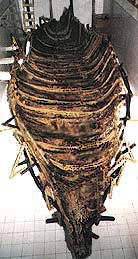
A friend of mine uses a boat analogy when talking with Mormons about salvation. An individual's good works are the planks of wood that make up the hull of the boat (salvation). Latter-day Saints believe the grace of God given through Christ is the pitch that fills in the cracks between the planks, making the boat safe and seaworthy. But there's a problem here.

Take a look at how God describes natural man in Romans 1:
"They were filled with all manner of unrighteousness, evil, covetousness, malice. They are full of envy, murder, strife, deceit, maliciousness. They are gossips, slanderers, haters of God, insolent, haughty, boastful, inventors of evil, disobedient to parents, foolish, faithless, heartless, ruthless." (Romans 1:29-31)

You see, the sin debt for each of us is enormous! Six-billion dollars. Two-hundred-thousand years' worth of labor.

Some might say, "Well, we have eternity to work it off. We can do it if we just have enough time." Sorry, folks. The master in Jesus' parable is already entitled to all the labor his servant can provide. The debt owed is above and beyond normal labor. It is impossible to pay.

And what makes us think that anything we do would be pleasing and acceptable to God anyway? Look again at the qualities He finds in us! How can our sin-tainted good works be used to build a sound boat? In my friend's analogy the truth is that the planks of the boat are all rotten. There's nothing there firm enough to be patched by God's grace. Instead of floating on the water this boat sinks like a stone—and takes anyone relying on it to the bottom of the sea.

No, there's nothing we can contribute to the building of our boat. Like the servant in Jesus' parable, our only hope is grace and mercy. God must provide both the planks and the pitch. And He does. Thanks be to God for His indescribable gift!

Labels: , , , , ,